


 Role management is important because it helps define and allocate responsibilities and duties among individuals within your organization. It allows for a clear distribution of tasks and helps ensure that everyone has a clear understanding and permissions of their role and what is expected of them.
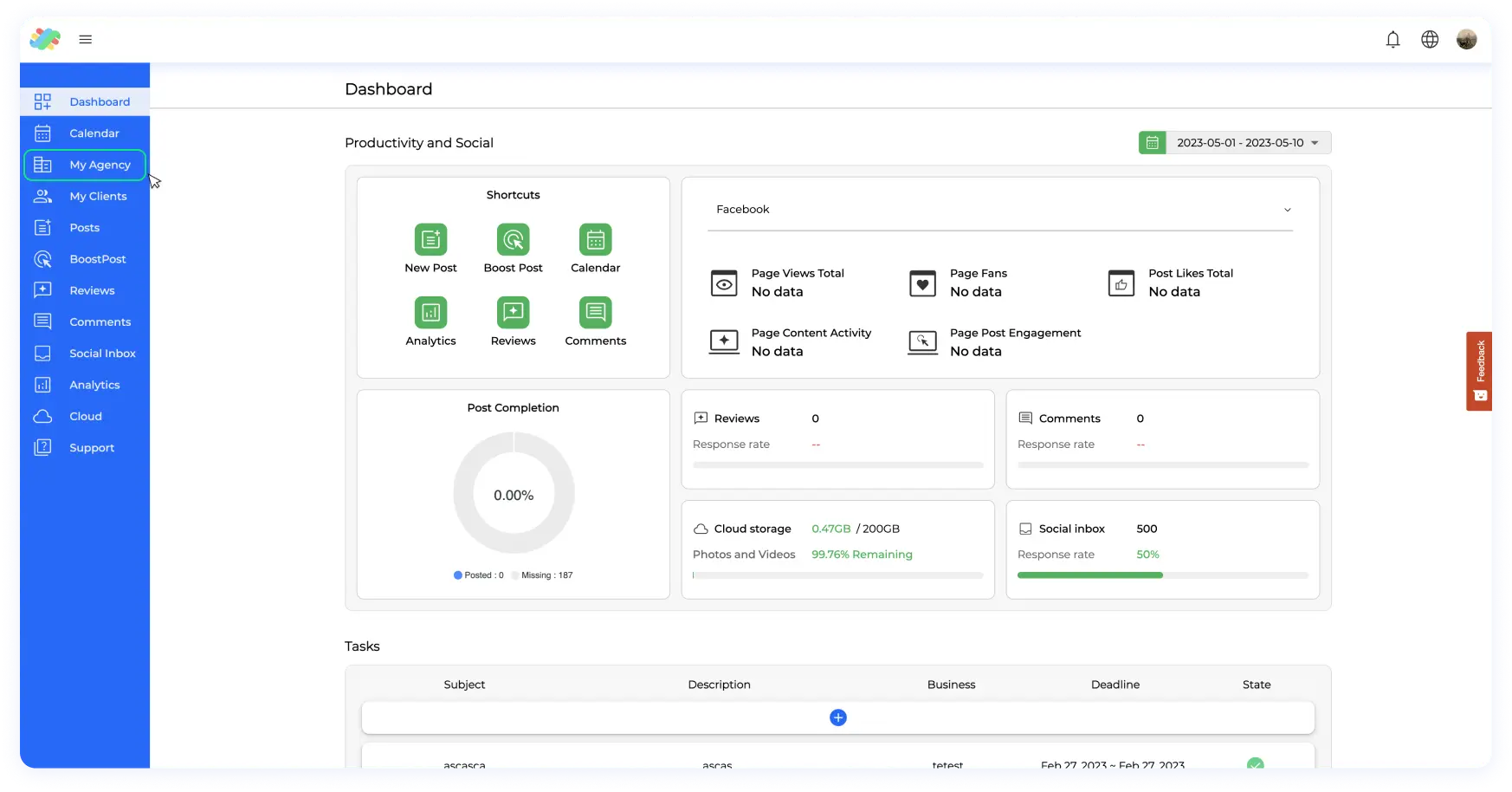
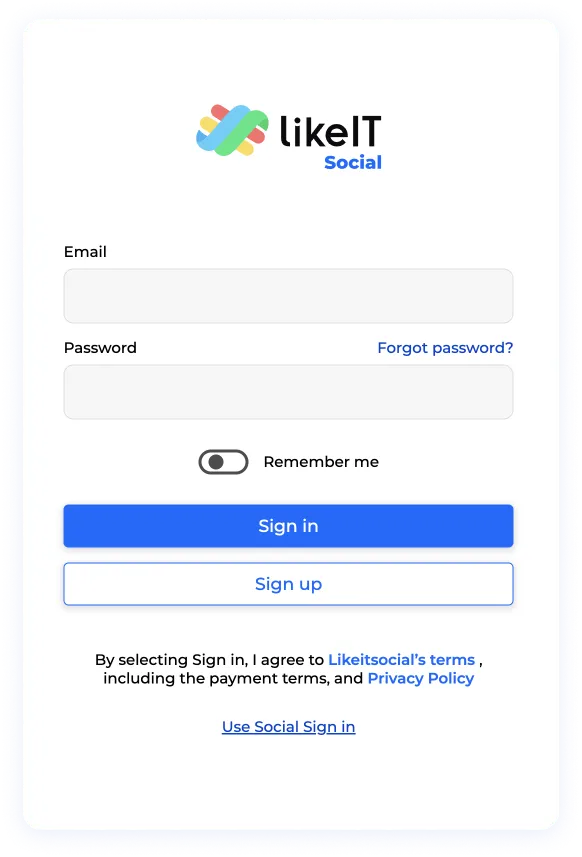 Step 2. Go to the left menu, then to “My Agency”
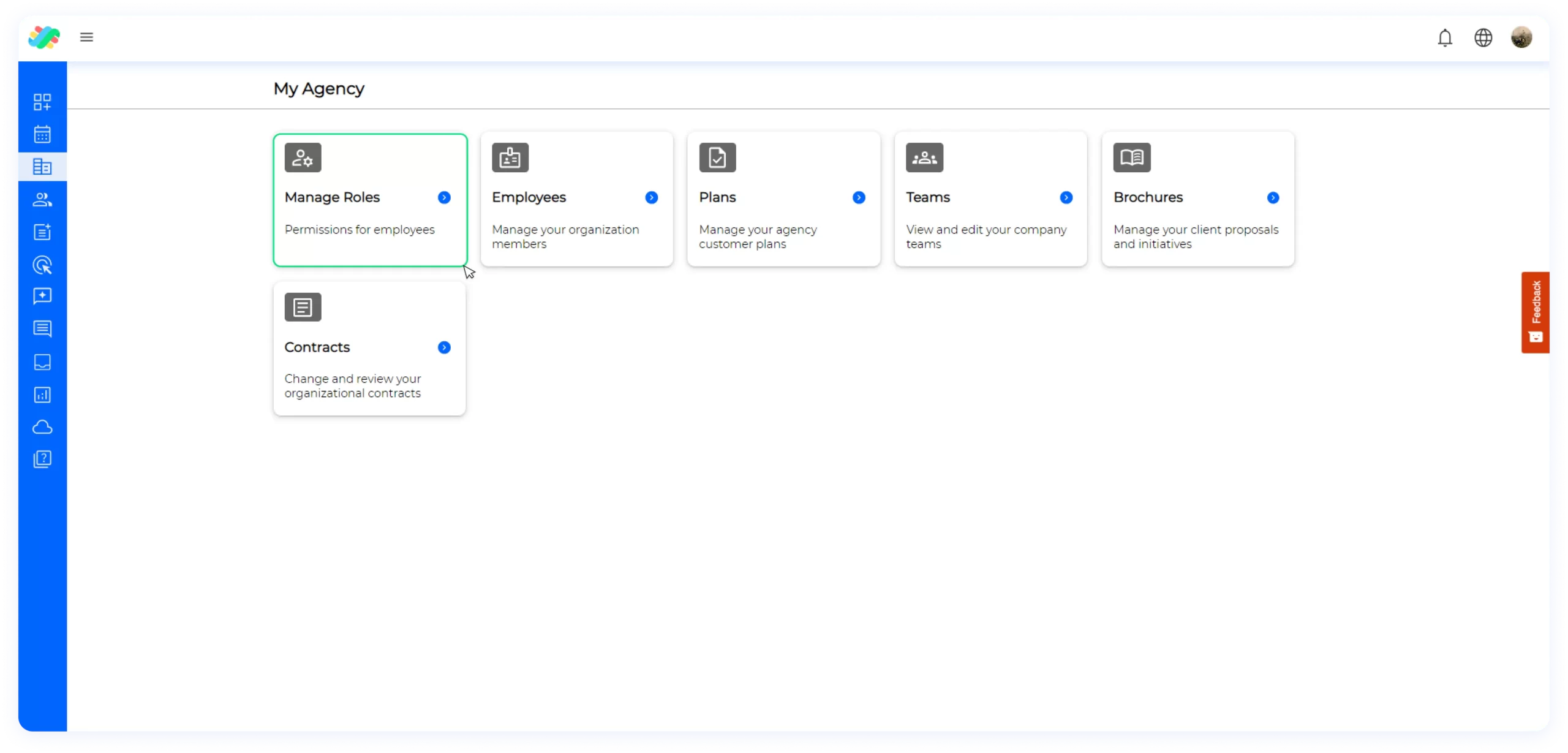
 Step 3. Select “Role Management”
 Step 4. On the left side, you’ll see a list of existing roles, and a button to create a new role
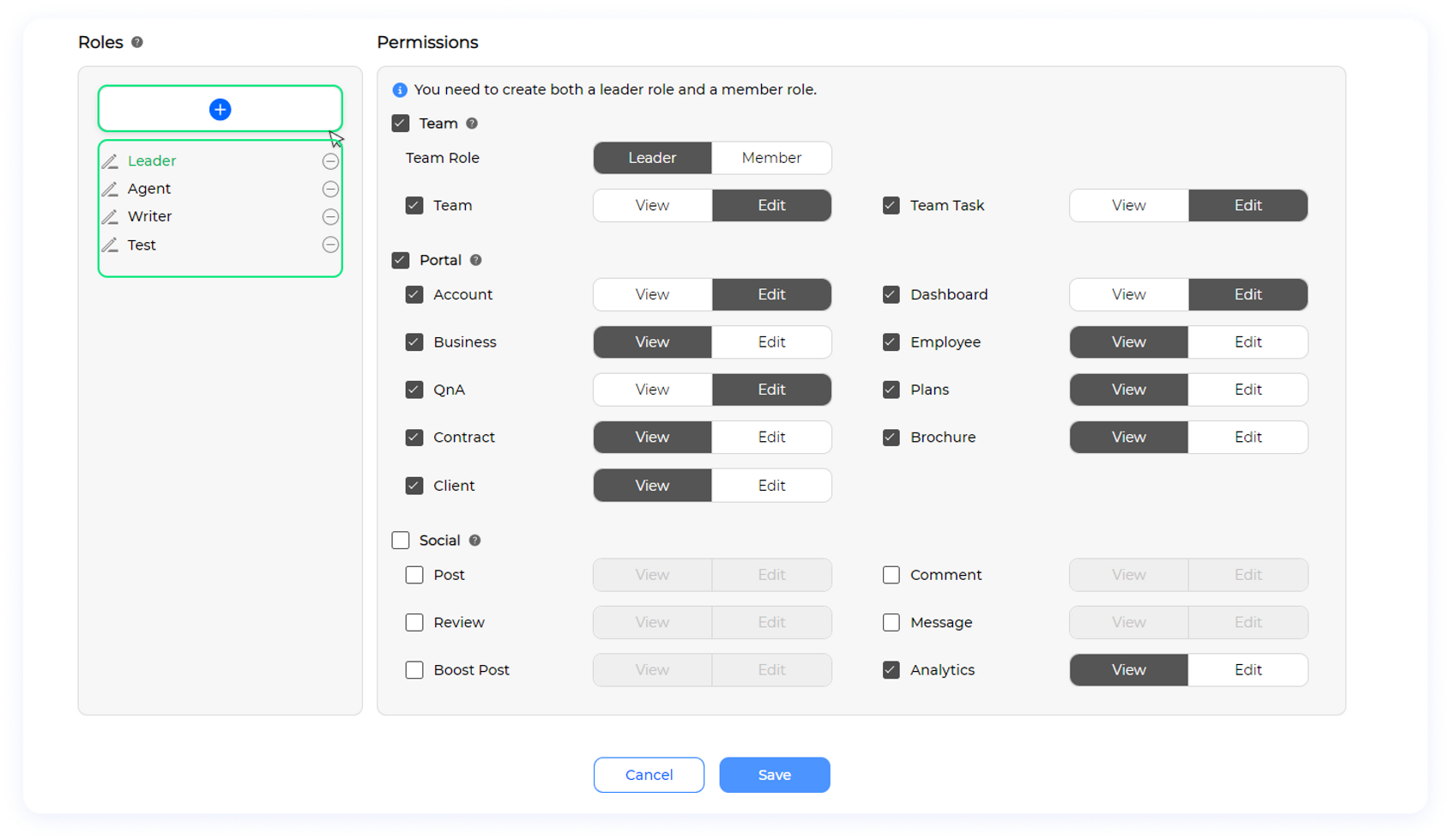 Step 5. Customize each role you create by defining permissions in the Team, Portal, and Social Media sections as follows:
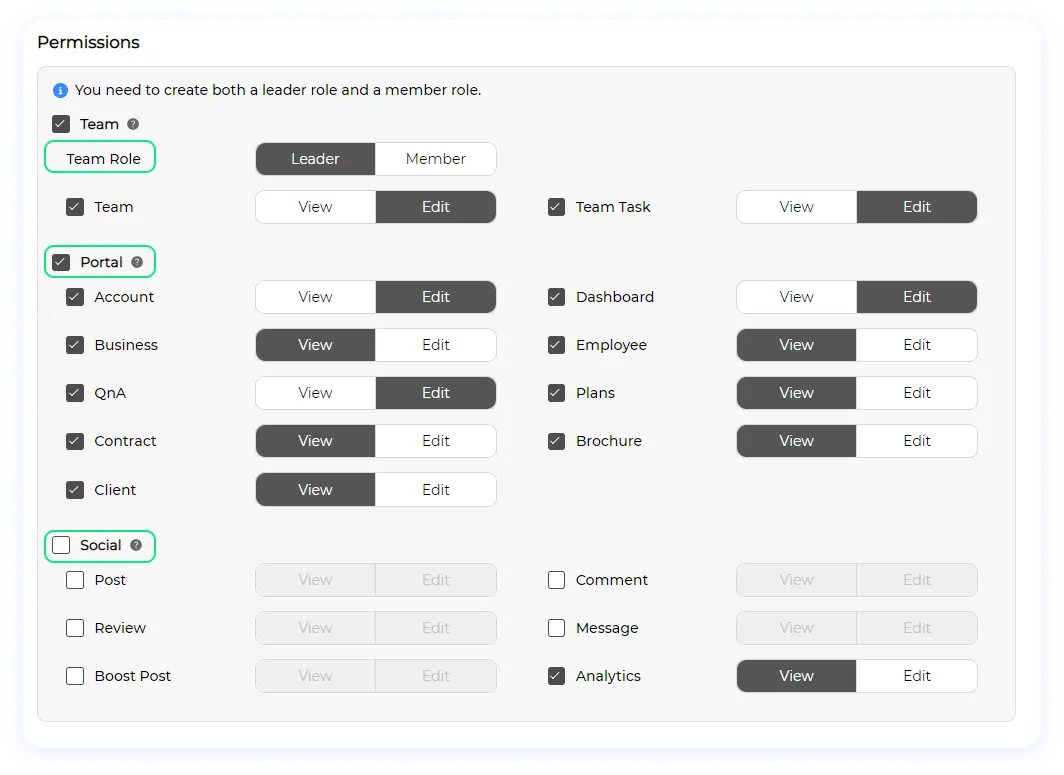 Team section:
In our system, we have a team leader and member structure. To set it up, you need to define at least one of each. Follow the steps below to get started.
Team section:
In our system, we have a team leader and member structure. To set it up, you need to define at least one of each. Follow the steps below to get started.


About Cookies
This website uses Cookies on this website are used to personalize content and ads, provide social media features and analyze traffic. In addition, we share information about your use of the website with our social media, advertising and web analytics partners, who may combine it with other information you have provided to them or that they have collected from your use of their services.
Read Cookie PolicyNecessary cookies help make a website usable by enabling basic functions like page navigation and access to secure areas of the website. The website cannot function properly without these cookies.
Preference cookies enable a website to remember information that changes the way the website behaves or looks, like your preferred language or the region that you are in.
Statistic cookies help website owners to understand how visitors interact with websites by collecting and reporting information anonymously.
Marketing cookies are used to track visitors across websites. The intention is to display ads that are relevant and engaging for the individual user and thereby more valuable for publishers and third-party advertisers.
Unclassified cookies are cookies that we are in the process of classifying, together with the providers of individual cookies.